Microsoft Azure Explorer Mac
Microsoft Azure Storage Explorer is a standalone app that makes it easy to work with Azure Storage data on Windows, macOS, and Linux. The app can connect to storage accounts hosted on Azure, national clouds, and Azure Stack.
2020-3-27 但是,Internet Explorer 11 在 Windows 7 上不再受支持。我们建议你改为安装新版 Microsoft Edge。新版 Microsoft Edge 经过精心设计,可让你充分地利用 Web,并在浏览时拥有更多控制权、获得. Microsoft Azure portal Build, manage, and monitor all Azure products in a single, unified console Cloud Shell Streamline Azure administration with a browser-based shell Azure mobile app Stay connected to your Azure resources—anytime, anywhere.
This guide summarizes solutions for issues that are commonly seen in Storage Explorer.
- First time installing, have not used Azure Storage Explorer on a Mac before. Bug Description 'After downloading the zip file, unzipping it, and trying to access the application, I got this error: 'Microsoft Azure Storage Explorer' can't be opened because Apple cannot check it for malicious software. This software needs to be updated.
- Nov 03, 2013 Can I download Internet Explorer on a Mac? Will it harm my existing computer etc? I currently have Safari, Google Chrome, and Firefox. Thank you Original title: browser.
- 2019-9-1 「StorageExplorer for Microsoft Azure」のレビューのチェック、カスタマー評価の比較、スクリーンショットやその他の詳細情報を見ることができます。macOS 10.10以降対応の「StorageExplorer for Microsoft Azure」をダウンロードして、Macでお楽しみください。.
- Get started with Storage Explorer.; 10 minutes to read +16; In this article Overview. Microsoft Azure Storage Explorer is a standalone app that makes it easy to work with Azure Storage data on Windows, macOS, and Linux.
- 2020-4-3 Whatever the reason, if you want to use Internet Explorer on a Mac, we’ll show you how to do it in the easiest possible way.Yes, it’s a complete version of IE11, it’s always the latest version, and it works great. This tip uses a free internet service from Microsoft called Modern IE, which relies on Remote Desktop to access Internet Explorer 11 from Windows but atop OS X.
RBAC permissions issues
Role-based access control RBAC enables highly granular access management of Azure resources by combining sets of permissions into roles. Here are some strategies to get RBAC working optimally in Storage Explorer.
How do I access my resources in Storage Explorer?
If you're having problems accessing storage resources through RBAC, you might not have been assigned the appropriate roles. The following sections describe the permissions Storage Explorer currently requires for access to your storage resources. Contact your Azure account administrator if you're not sure you have the appropriate roles or permissions.
'Read: List/Get Storage Account(s)' permissions issue
You must have permission to list storage accounts. To get this permission, you must be assigned the Reader role.
List storage account keys
Storage Explorer can also use account keys to authenticate requests. You can get access to account keys through more powerful roles, such as the Contributor role.
Note
Access keys grant unrestricted permissions to anyone who holds them. Therefore, we don't recommend that you hand out these keys to account users. If you need to revoke access keys, you can regenerate them from the Azure portal.
Data roles
You must be assigned at least one role that grants access to read data from resources. For example, if you want to list or download blobs, you'll need at least the Storage Blob Data Reader role.
Why do I need a management layer role to see my resources in Storage Explorer?
Azure Storage has two layers of access: management and data. Subscriptions and storage accounts are accessed through the management layer. Containers, blobs, and other data resources are accessed through the data layer. For example, if you want to get a list of your storage accounts from Azure, you send a request to the management endpoint. If you want a list of blob containers in an account, you send a request to the appropriate service endpoint.
RBAC roles can contain permissions for management or data layer access. The Reader role, for example, grants read-only access to management layer resources.
Strictly speaking, the Reader role provides no data layer permissions and isn't necessary for accessing the data layer.

Storage Explorer makes it easy to access your resources by gathering the necessary information to connect to your Azure resources. For example, to display your blob containers, Storage Explorer sends a 'list containers' request to the blob service endpoint. To get that endpoint, Storage Explorer searches the list of subscriptions and storage accounts you have access to. To find your subscriptions and storage accounts, Storage Explorer also needs access to the management layer.
If you don’t have a role that grants any management layer permissions, Storage Explorer can’t get the information it needs to connect to the data layer.
What if I can't get the management layer permissions I need from my administrator?
We don't currently have an RBAC-related solution for this issue. As a workaround, you can request a SAS URI to attach to your resource.
Recommended built-in RBAC roles
There are several built-in RBAC roles which can provide the permissions needed to use Storage Explorer. Some of those roles are:
- Owner: Manage everything, including access to resources. Note: this role will give you key access.
- Contributor: Manage everything, excluding access to resources. Note: this role will give you key access.
- Reader: Read and list resources.
- Storage Account Contributor: Full management of storage accounts. Note: this role will give you key access.
- Storage Blob Data Owner: Full access to Azure Storage blob containers and data.
- Storage Blob Data Contributor: Read, write, and delete Azure Storage containers and blobs.
- Storage Blob Data Reader: Read and list Azure Storage containers and blobs.
Error: Self-signed certificate in certificate chain (and similar errors)
Certificate errors typically occur in one of the following situations:
- The app is connected through a transparent proxy, which means a server (such as your company server) is intercepting HTTPS traffic, decrypting it, and then encrypting it by using a self-signed certificate.
- You're running an application that's injecting a self-signed TLS/SSL certificate into the HTTPS messages that you receive. Examples of applications that inject certificates include antivirus and network traffic inspection software.
When Storage Explorer sees a self-signed or untrusted certificate, it no longer knows whether the received HTTPS message has been altered. If you have a copy of the self-signed certificate, you can instruct Storage Explorer to trust it by following these steps:
- Obtain a Base-64 encoded X.509 (.cer) copy of the certificate.
- Go to Edit > SSL Certificates > Import Certificates, and then use the file picker to find, select, and open the .cer file.
This issue may also occur if there are multiple certificates (root and intermediate). To fix this error, both certificates must be added.
If you're unsure of where the certificate is coming from, follow these steps to find it:
- Install OpenSSL.
- Windows: Any of the light versions should be sufficient.
- Mac and Linux: Should be included with your operating system.
- Run OpenSSL.
- Windows: Open the installation directory, select /bin/, and then double-click openssl.exe.
- Mac and Linux: Run
opensslfrom a terminal.
- Run
s_client -showcerts -connect microsoft.com:443. - Look for self-signed certificates. If you're unsure of which certificates are self-signed, make note of anywhere the subject
('s:')and issuer('i:')are the same. - When you find self-signed certificates, for each one, copy and paste everything from (and including)
-----BEGIN CERTIFICATE-----through-----END CERTIFICATE-----into a new .cer file. - Open Storage Explorer and go to Edit > SSL Certificates > Import Certificates. Then use the file picker to find, select, and open the .cer files that you created.
If you can't find any self-signed certificates by following these steps, contact us through the feedback tool. You can also open Storage Explorer from the command line by using the --ignore-certificate-errors flag. When opened with this flag, Storage Explorer ignores certificate errors.
Sign-in issues
Blank sign-in dialog box
Blank sign-in dialog boxes most often occur when Active Directory Federation Services (AD FS) prompts Storage Explorer to perform a redirect, which is unsupported by Electron. To work around this issue, you can try to use Device Code Flow for sign-in. To do so, follow these steps:
- On the left vertical tool bar, open Settings. In the Settings Panel, go to Application > Sign in. Enable Use device code flow sign-in.
- Open the Connect dialog box (either through the plug icon on the left-side vertical bar or by selecting Add Account on the account panel).
- Choose the environment you want to sign in to.
- Select Sign In.
- Follow the instructions on the next panel.
If you can't sign in to the account you want to use because your default browser is already signed in to a different account, do one of the following:
- Manually copy the link and code into a private session of your browser.
- Manually copy the link and code into a different browser.
Reauthentication loop or UPN change
If you're in a reauthentication loop or have changed the UPN of one of your accounts, follow these steps:
- Remove all accounts and then close Storage Explorer.
- Delete the .IdentityService folder from your machine. On Windows, the folder is located at
C:users<username>AppDataLocal. For Mac and Linux, you can find the folder at the root of your user directory. - If you're running Mac or Linux, you'll also need to delete the Microsoft.Developer.IdentityService entry from your operating system's keystore. On the Mac, the keystore is the Gnome Keychain application. In Linux, the application is typically called Keyring, but the name might differ depending on your distribution.
Conditional Access
Because of a limitation in the Azure AD Library used by Storage Explorer, Conditional Access isn't supported when Storage Explorer is being used on Windows 10, Linux, or macOS.
Mac Keychain errors
The macOS Keychain can sometimes enter a state that causes issues for the Storage Explorer authentication library. To get the Keychain out of this state, follow these steps:
Close Storage Explorer.
Open Keychain (press Command+Spacebar, type keychain, and press Enter).
Select the 'login' Keychain.
Select the padlock icon to lock the Keychain. (The padlock will appear locked when the process is complete. It might take a few seconds, depending on what apps you have open).
Open Storage Explorer.
You're prompted with a message like 'Service hub wants to access the Keychain.' Enter your Mac admin account password and select Always Allow (or Allow if Always Allow isn't available).
Try to sign in.
General sign-in troubleshooting steps
- If you're on macOS, and the sign-in window never appears over the Waiting for authentication dialog box, try these steps.
- Restart Storage Explorer.
- If the authentication window is blank, wait at least one minute before closing the authentication dialog box.
- Make sure that your proxy and certificate settings are properly configured for both your machine and Storage Explorer.
- If you're running Windows and have access to Visual Studio 2019 on the same machine and to the sign-in credentials, try signing in to Visual Studio 2019. After a successful sign-in to Visual Studio 2019, you can open Storage Explorer and see your account in the account panel.
If none of these methods work, open an issue in GitHub.
Missing subscriptions and broken tenants
If you can't retrieve your subscriptions after you successfully sign in, try the following troubleshooting methods:
- Verify that your account has access to the subscriptions you expect. You can verify your access by signing in to the portal for the Azure environment you're trying to use.
- Make sure you've signed in through the correct Azure environment (Azure, Azure China 21Vianet, Azure Germany, Azure US Government, or Custom Environment).
- If you're behind a proxy server, make sure you've configured the Storage Explorer proxy correctly.
- Try removing and re-adding the account.
- If there's a 'More information' link, check which error messages are being reported for the tenants that are failing. If you aren't sure how to respond to the error messages, feel free to open an issue in GitHub.
Can't remove an attached account or storage resource
If you can't remove an attached account or storage resource through the UI, you can manually delete all attached resources by deleting the following folders:
- Windows:
%AppData%/StorageExplorer - macOS:
/Users/<your_name>/Library/Application Support/StorageExplorer - Linux:
~/.config/StorageExplorer
Note
Close Storage Explorer before you delete these folders.
Note
If you have ever imported any SSL certificates, back up the contents of the certs directory. Later, you can use the backup to reimport your SSL certificates.
Proxy issues
First, make sure that the following information you entered is correct:
- The proxy URL and port number
- Username and password if the proxy requires them
Note
Storage Explorer doesn't support proxy auto-config files for configuring proxy settings.
Common solutions
If you're still experiencing issues, try the following troubleshooting methods:
- If you can connect to the internet without using your proxy, verify that Storage Explorer works without proxy settings enabled. If this is the case, there may be an issue with your proxy settings. Work with your administrator to identify the problems.
- Verify that other applications that use the proxy server work as expected.
- Verify that you can connect to the portal for the Azure environment you're trying to use.
- Verify that you can receive responses from your service endpoints. Enter one of your endpoint URLs into your browser. If you can connect, you should receive InvalidQueryParameterValue or a similar XML response.
- If someone else is also using Storage Explorer with your proxy server, verify that they can connect. If they can, you may have to contact your proxy server admin.
Tools for diagnosing issues
If you have networking tools, such as Fiddler for Windows, you can diagnose the problems as follows:
If you have to work through your proxy, you may have to configure your networking tool to connect through the proxy.
Check the port number used by your networking tool.
Enter the local host URL and the networking tool's port number as proxy settings in Storage Explorer. When you do this correctly, your networking tool starts logging network requests made by Storage Explorer to management and service endpoints. For example, enter
https://cawablobgrs.blob.core.windows.net/for your blob endpoint in a browser, and you'll receive a response that resembles the following:This response suggests the resource exists, even though you can't access it.
Contact proxy server admin
If your proxy settings are correct, you may have to contact your proxy server admin to:
- Make sure your proxy doesn't block traffic to Azure management or resource endpoints.
- Verify the authentication protocol used by your proxy server. Storage Explorer doesn't currently support NTLM proxies.
'Unable to Retrieve Children' error message
If you're connected to Azure through a proxy, verify that your proxy settings are correct. If you're granted access to a resource from the owner of the subscription or account, verify that you have read or list permissions for that resource.
Connection string doesn't have complete configuration settings
If you receive this error message, it's possible that you don't have the necessary permissions to obtain the keys for your storage account. To confirm that this is the case, go to the portal and locate your storage account. You can do this by right-clicking the node for your storage account and selecting Open in Portal. Then, go to the Access Keys blade. If you don't have permissions to view keys, you'll see a 'You don't have access' message. To work around this issue, you can either obtain the account key from someone else and attach through the name and key, or you can ask someone for a SAS to the storage account and use it to attach the storage account.
If you do see the account keys, file an issue in GitHub so that we can help you resolve the issue.
Error occurred while adding new connection: TypeError: Cannot read property 'version' of undefined
If you receive this error message when you try to add a custom connection, the connection data that's stored in the local credential manager might be corrupted. To work around this issue, try deleting your corrupted local connections, and then re-add them:
- Start Storage Explorer. From the menu, go to Help > Toggle Developer Tools.
- In the opened window, on the Application tab, go to Local Storage (left side) > file://.
- Depending on the type of connection you're having an issue with, look for its key and then copy its value into a text editor. The value is an array of your custom connection names, like the following:
- Storage accounts
StorageExplorer_CustomConnections_Accounts_v1
- Blob containers
StorageExplorer_CustomConnections_Blobs_v1StorageExplorer_CustomConnections_Blobs_v2
- File shares
StorageExplorer_CustomConnections_Files_v1
- Queues
StorageExplorer_CustomConnections_Queues_v1
- Tables
StorageExplorer_CustomConnections_Tables_v1
- Storage accounts
- After you save your current connection names, set the value in Developer Tools to
[].
If you want to preserve the connections that aren't corrupted, you can use the following steps to locate the corrupted connections. If you don't mind losing all existing connections, you can skip these steps and follow the platform-specific instructions to clear your connection data.
- From a text editor, re-add each connection name to Developer Tools, and then check whether the connection is still working.
- If a connection is working correctly, it's not corrupted and you can safely leave it there. If a connection isn't working, remove its value from Developer Tools, and record it so that you can add it back later.
- Repeat until you have examined all your connections.
After going through all your connections, for all connections names that aren't added back, you must clear their corrupted data (if there is any) and add them back by using the standard steps in Storage Explorer:
- On the Start menu, search for Credential Manager and open it.
- Go to Windows Credentials.
- Under Generic Credentials, look for entries that have the
<connection_type_key>/<corrupted_connection_name>key (for example,StorageExplorer_CustomConnections_Accounts_v1/account1). - Delete these entries and re-add the connections.
- Open Spotlight (Command+Spacebar) and search for Keychain access.
- Look for entries that have the
<connection_type_key>/<corrupted_connection_name>key (for example,StorageExplorer_CustomConnections_Accounts_v1/account1). - Delete these entries and re-add the connections.
Azure Data Explorer
Local credential management varies depending on the Linux distribution. If your Linux distribution doesn't provide a built-in GUI tool for local credential management, you can install a third-party tool to manage your local credentials. For example, you can use Seahorse, an open-source GUI tool for managing Linux local credentials.
- Open your local credential management tool, and find your saved credentials.
- Look for entries that have the
<connection_type_key>/<corrupted_connection_name>key (for example,StorageExplorer_CustomConnections_Accounts_v1/account1). - Delete these entries and re-add the connections.
If you still encounter this error after running these steps, or if you want to share what you suspect has corrupted the connections, open an issue on our GitHub page.
Issues with SAS URL
If you're connecting to a service through a SAS URL and experiencing an error:
- Verify that the URL provides the necessary permissions to read or list resources.
- Verify that the URL has not expired.
- If the SAS URL is based on an access policy, verify that the access policy has not been revoked.
If you accidentally attached by using an invalid SAS URL and now cannot detach, follow these steps:
- When you're running Storage Explorer, press F12 to open the Developer Tools window.
- On the Application tab, select Local Storage > file:// in the tree on the left.
- Find the key associated with the service type of the problematic SAS URI. For example, if the bad SAS URI is for a blob container, look for the key named
StorageExplorer_AddStorageServiceSAS_v1_blob. - The value of the key should be a JSON array. Find the object associated with the bad URI, and then delete it.
- Press Ctrl+R to reload Storage Explorer.
Linux dependencies
Storage Explorer 1.10.0 and later is available as a snap from the Snap Store. The Storage Explorer snap installs all its dependencies automatically, and it's updated when a new version of the snap is available. Installing the Storage Explorer snap is the recommended method of installation.
Storage Explorer requires the use of a password manager, which you might need to connect manually before Storage Explorer will work correctly. You can connect Storage Explorer to your system's password manager by running the following command:
You can also download the application as a .tar.gz file, but you'll have to install dependencies manually.
Important
Storage Explorer as provided in the .tar.gz download is supported only for Ubuntu distributions. Other distributions haven't been verified and may require alternative or additional packages.
These packages are the most common requirements for Storage Explorer on Linux:
libgconf-2-4libgnome-keyring0orlibgnome-keyring-devlibgnome-keyring-common
Note
Storage Explorer version 1.7.0 and earlier require .NET Core 2.0. If you have a newer version of .NET Core installed, you'll have to patch Storage Explorer. If you're running Storage Explorer 1.8.0 or later, you should be able to use up to .NET Core 2.2. Versions beyond 2.2 have not been verified to work at this time.
- Download Storage Explorer.
- Install the .NET Core Runtime.
- Run the following command:
- Download Storage Explorer.
- Install the .NET Core Runtime.
- Run the following command:
- Download Storage Explorer.
- Install the .NET Core Runtime.
- Run the following command:
- Download Storage Explorer.
- Install the .NET Core Runtime.
- Run the following command:
Patching Storage Explorer for newer versions of .NET Core
For Storage Explorer 1.7.0 or earlier, you might have to patch the version of .NET Core used by Storage Explorer:
- Download version 1.5.43 of StreamJsonRpc from NuGet. Look for the 'Download package' link on the right side of the page.
- After you download the package, change its file extension from
.nupkgto.zip. - Unzip the package.
- Open the
streamjsonrpc.1.5.43/lib/netstandard1.1/folder. - Copy
StreamJsonRpc.dllto the following locations in the Storage Explorer folder:StorageExplorer/resources/app/ServiceHub/Services/Microsoft.Developer.IdentityService/StorageExplorer/resources/app/ServiceHub/Hosts/ServiceHub.Host.Core.CLR.x64/
'Open In Explorer' from the Azure portal doesn't work
If the Open In Explorer button on the Azure portal doesn't work, make sure you're using a compatible browser. The following browsers have been tested for compatibility:
- Microsoft Edge
- Mozilla Firefox
- Google Chrome
- Microsoft Internet Explorer
Next steps
If none of these solutions work for you, open an issue in GitHub. You can also do this by selecting the Report issue to GitHub button in the lower-left corner.
-->Overview
Microsoft Azure Storage Explorer is a standalone app that makes it easy to work with Azure Storage data on Windows, macOS, and Linux. In this article, you'll learn several ways of connecting to and managing your Azure storage accounts.
Prerequisites
The following versions of Windows support Storage Explorer:
- Windows 10 (recommended)
- Windows 8
- Windows 7
For all versions of Windows, Storage Explorer requires .NET Framework 4.6.2 or later.
The following versions of macOS support Storage Explorer:
- macOS 10.12 Sierra and later versions
Storage Explorer is available in the Snap Store for most common distributions of Linux. We recommend Snap Store for this installation. The Storage Explorer snap installs all of its dependencies and updates when new versions are published to the Snap Store.
For supported distributions, see the snapd installation page.
Storage Explorer requires the use of a password manager. You might have to connect to a password manager manually. You can connect Storage Explorer to your system's password manager by running the following command:
Storage Explorer is also available as a .tar.gz download. You have to install dependencies manually. The following distributions of Linux support .tar.gz installation:
- Ubuntu 18.04 x64
- Ubuntu 16.04 x64
- Ubuntu 14.04 x64
The .tar.gz installation might work on other distributions, but only these listed ones are officially supported.
For more help installing Storage Explorer on Linux, see Linux dependencies in the Azure Storage Explorer troubleshooting guide.
Download and install
To download and install Storage Explorer, see Azure Storage Explorer.
Connect to a storage account or service
Storage Explorer provides several ways to connect to storage accounts. In general you can either:
Sign in to Azure
Note
To fully access resources after you sign in, Storage Explorer requires both management (Azure Resource Manager) and data layer permissions. This means that you need Azure Active Directory (Azure AD) permissions, which give you access to your storage account, the containers in the account, and the data in the containers. If you have permissions only at the data layer, consider adding a resource through Azure AD. For more information about the specific permissions Storage Explorer requires, see the Azure Storage Explorer troubleshooting guide.
In Storage Explorer, select View > Account Management or select the Manage Accounts button.
ACCOUNT MANAGEMENT now displays all the Azure accounts you've signed in to. To connect to another account, select Add an account.
In Connect to Azure Storage, select an Azure cloud from Azure environment to sign in to a national cloud or an Azure Stack. After you choose your environment, select Next.
Storage Explorer opens a page for you to sign in. For more information, see Connect storage explorer to an Azure Stack subscription or storage account.
After you successfully sign in with an Azure account, the account and the Azure subscriptions associated with that account appear under ACCOUNT MANAGEMENT. Select All subscriptions to toggle your selection between all or none of the listed Azure subscriptions. Select the Azure subscriptions that you want to work with, and then select Apply.
EXPLORER displays the storage accounts associated with the selected Azure subscriptions.
Attach a specific resource
There are several ways to attach to a resource in Storage Explorer:
- Add a resource via Azure AD. If you have permissions only at the data layer, use this option to add a blob container or an Azure Data Lake Storage Gen2 Blob storage container.
- Use a connection string. Use this option if you have a connection string to a storage account. Storage Explorer supports both key and shared access signature connection strings.
- Use a shared access signature URI. If you have a shared access signature URI to a blob container, file share, queue, or table, use it to attach to the resource. To get a shared access signature URI, you can either use Storage Explorer or the Azure portal.
- Use a name and key. If you know either of the account keys to your storage account, you can use this option to quickly connect. Find your keys in the storage account page by selecting Settings > Access keys in the Azure portal.
- Attach to a local emulator. If you're using one of the available Azure Storage emulators, use this option to easily connect to your emulator.
- Connect to an Azure Cosmos DB account by using a connection string. Use this option if you have a connection string to a CosmosDB instance.
- Connect to Azure Data Lake Store by URI. Use this option if you have a URI to Azure Data Lake Store.
Add a resource via Azure AD
Select the Connect symbol to open Connect to Azure Storage.
If you haven't already done so, use the Add an Azure Account option to sign in to the Azure account that has access to the resource. After you sign in, return to Connect to Azure Storage.
Select Add a resource via Azure Active Directory (Azure AD), and then select Next.
Select an Azure account and tenant. These values must have access to the Storage resource you want to attach to. Select Next.
Choose the resource type you want to attach. Enter the information needed to connect.
The information you enter on this page depends on what type of resource you're adding. Make sure to choose the correct type of resource. After you've entered the required information, select Next.
Review the Connection Summary to make sure all the information is correct. If it is, select Connect. Otherwise, select Back to return to the previous pages to fix any incorrect information.
After the connection is successfully added, the resource tree goes to the node that represents the connection. The resource appears under Local & Attached > Storage Accounts > (Attached Containers) > Blob Containers. If Storage Explorer couldn't add your connection, or if you can't access your data after successfully adding the connection, see the Azure Storage Explorer troubleshooting guide.
Use a connection string
Select the Connect symbol to open Connect to Azure Storage.
Select Use a connection string, and then select Next.
Choose a display name for your connection and enter your connection string. Then, select Next.
Review the Connection Summary to make sure all the information is correct. If it is, select Connect. Otherwise, select Back to return to the previous pages to fix any incorrect information.
After the connection is successfully added, the resource tree goes to the node that represents the connection. The resource appears under Local & Attached > Storage Accounts. If Storage Explorer couldn't add your connection, or if you can't access your data after successfully adding the connection, see the Azure Storage Explorer troubleshooting guide.
Use a shared access signature URI
Select the Connect symbol to open Connect to Azure Storage.
Select Use a shared access signature (SAS) URI, and then select Next.
Choose a display name for your connection and enter your shared access signature URI. The service endpoint for the type of resource you're attaching should autofill. If you're using a custom endpoint, it's possible it might not. Select Next.
Using OWA to manage Junk mail filtering, and Safe and Blocked Senders in Exchange. Sign in to OWA, click the Gear icon at the upper-right, and then select Options. Click Mail - Accounts - Block or allow, and then configure the options as you prefer. Block or unblock a sender - Outlook for Mac. On the Tools menu, click Junk E-mail Protection. On the Blocked Senders tab, in the Blocked Senders text box, select the email address or domain that you want to unblock, and then press the Dele. Dec 17, 2016 Junk Mail filtering not working in Outlook 365 (2016) on Mac We have tested this extensively and still finding that Junk Mail filtering is NOT working correctly in Outlook for Mac 2016 We have to run the mail on a Windows PC using Outlook 365 (2016).let the spam get intercepted by the mail rules and removed, and then wait for the mail to. Microsoft outlook on mac junk folder. In the message list in your Junk Folder, select the message or messages you wish to classify as 'Not Junk.' On the Home tab, click Junk, and then click Not Junk or Mark as Not Junk. OR Open the message you wish to classify as Not Junk. If Outlook filters suspect the message may be junk, you will see the below message. The Outlook Junk Email Filter doesn’t stop delivery of junk email messages, but does the next best thing—it moves suspected spam to the Junk Email folder. Newer versions Office 2010 Office 2007 Tips: It's a good idea to regularly review messages in the Junk Email folder to check for legitimate messages that were incorrectly classified as junk.
Review the Connection Summary to make sure all the information is correct. If it is, select Connect. Otherwise, select Back to return to the previous pages to fix any incorrect information.
After the connection is successfully added, the resource tree goes to the node that represents the connection. The resource appears under Local & Attached > Storage Accounts > (Attached Containers) > the service node for the type of container you attached. If Storage Explorer couldn't add your connection, see the Azure Storage Explorer troubleshooting guide. See the troubleshooting guide if you can't access your data after successfully adding the connection.
Use a name and key
Select the Connect symbol to open Connect to Azure Storage.
Select Use a storage account name and key, and then select Next.
Choose a display name for your connection.
Enter your storage account name and either of its access keys.
Choose the Storage domain to use and then select Next.
Review the Connection Summary to make sure all the information is correct. If it is, select Connect. Otherwise, select Back to return to the previous pages to fix any incorrect information.
In other apps like Outlook mobile, the sensitivity labels will be disabled instead.
 Note: If you don't have permission to change or remove a sensitivity label, you'll be prevented from doing so with an error message in most apps. What happens when I apply a sensitivity label?When you apply a sensitivity label, the label information will persist with your document or email, even as it is shared between devices, applications, and cloud services. Applying a sensitivity label may also result in changes to your document or email according to your organization's configuration, such as:.Encryption with may be applied to your document or email.A header or footer may appear in your document or email.A watermark may appear in your document.
After the connection is successfully added, the resource tree goes to the node that represents the connection. The resource appears under Local & Attached > Storage Accounts. If Storage Explorer couldn't add your connection, or if you can't access your data after successfully adding the connection, see the Azure Storage Explorer troubleshooting guide.
Attach to a local emulator
Storage Explorer currently supports two official Storage emulators:
- Azure Storage emulator (Windows only)
- Azurite (Windows, macOS, or Linux)
If your emulator is listening on the default ports, you can use the Emulator - Default Ports node to access your emulator. Look for Emulator - Default Ports under Local & Attached > Storage Accounts.
If you want to use a different name for your connection, or if your emulator isn't running on the default ports, follow these steps:
Start your emulator. Enter the command
AzureStorageEmulator.exe statusto display the ports for each service type.Important
Storage Explorer doesn't automatically start your emulator. You must start it manually.
Select the Connect symbol to open Connect to Azure Storage.
Select Attach to a local emulator, and then select Next.
Choose a display name for your connection and enter the ports your emulator is listening on for each service type. Attach to a Local Emulator suggests the default port values for most emulators. Files port is blank, because neither of the official emulators currently support the Files service. If the emulator you're using does support Files, you can enter the port to use. Then, select Next.
Review the Connection Summary and make sure all the information is correct. If it is, select Connect. Otherwise, select Back to return to the previous pages to fix any incorrect information.
After the connection is successfully added, the resource tree goes to the node that represents the connection. The node should appear under Local & Attached > Storage Accounts. If Storage Explorer couldn't add your connection, or if you can't access your data after successfully adding the connection, see the Azure Storage Explorer troubleshooting guide.
Connect to an Azure Cosmos DB account by using a connection string
Instead of managing Azure Cosmos DB accounts through an Azure subscription, you can connect to Azure Cosmos DB by using a connection string. To connect, follow these steps:
Under EXPLORER, expand Local & Attached, right-click Cosmos DB Accounts, and select Connect to Azure Cosmos DB.
Select the Azure Cosmos DB API, enter your Connection String data, and then select OK to connect the Azure Cosmos DB account. For information about how to retrieve the connection string, see Manage an Azure Cosmos account.
Connect to Azure Data Lake Store by URI
You can access a resource that's not in your subscription. You need someone who has access to that resource to give you the resource URI. After you sign in, connect to Data Lake Store by using the URI. To connect, follow these steps:
Under EXPLORER, expand Local & Attached.
Right-click Data Lake Storage Gen1, and select Connect to Data Lake Storage Gen1.
Enter the URI, and then select OK. Your Data Lake Store appears under Data Lake Storage.
Microsoft Azure Explorer Mac Free
This example uses Data Lake Storage Gen1. Azure Data Lake Storage Gen2 is now available. For more information, see What is Azure Data Lake Storage Gen1.
Generate a shared access signature in Storage Explorer
Account level shared access signature
Right-click the storage account you want share, and then select Get Shared Access Signature.
In Shared Access Signature, specify the time frame and permissions you want for the account, and then select Create.
Copy either the Connection string or the raw Query string to your clipboard.
Service level shared access signature
You can get a shared access signature at the service level. For more information, see Get the SAS for a blob container.
Search for storage accounts
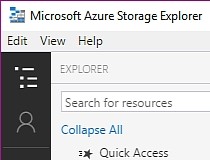
To find a storage resource, you can search in the EXPLORER pane.
As you enter text in the search box, Storage Explorer displays all resources that match the search value you've entered up to that point. This example shows a search for endpoints:
Note
To speed up your search, use Account Management to deselect any subscriptions that don't contain the item you're searching for. You can also right-click a node and select Search From Here to start searching from a specific node.